Skip Navigation

One of the eight disciplines of the total athlete development program is Vision Training. As with other forms of exercise intended to improve athletic performance, Vision Training enhances an athlete’s visual abilities. Vision Training often increases strength in the muscles of the eye, the endurance of these muscles and improves communication between the brain and the images captured by the eyes, thus improving the speed and efficiency by which an athlete can process the information that they see. Using nine exercise protocols, students are educated on how to apply their training into their prospective sport. Optimum effects are achieved after 36 sessions and are available to you now at IMG Academies!

Below is a description of the many visual abilities that athletes improve in the program:


Visual Alignment

The ability of both eyes to be used together are important determinants in how effective an athlete can target distant objects (depth perception) since both eyes need to move simultaneously to locate and maintain focus on an object. The ability for an athlete’s eyes to ‘converge’ the eyes together toward a target and ‘diverge’ they away from a target can indicate reaction and timing skills important in all sports.

Specific sport skill Improvement example:
A wide receiver in football can determine the accurate location of a ball and how much time and distance they have to cover to receive the ball. A golf player will be better positioned to address the ball and make the best type of contact with the club as both eyes align accurately to the ball.

Concentration

In any performance, developing attention and focusing skills can separate wins and losses as such skills focus the brain and the eyes on what is important to performing that athletic skill. The ability to scan a particular area from a very broad view and then recognize the visual cues that are important to initiate action and decision making are trained using the concentration board trainer.

Specific sport skill Improvement example:
A baseball outfielder attempting to catch a fly ball needs to be able to avoid background distractions such as the crowd or other approaching teammates by concentrating on important visual details (the ball) without focusing too intently on any of the irrelevant visual pieces of information. 

Visual Memory

The ability for the eyes and the brain to communicate efficiently with accuracy and speed can be enhanced as athletes train their visual memory. Great performers are not only able to see things clearer, but they are able to pick up important visual cues at a fraction of a second and be able to cognitively process the best course of motor action to initiate an effective response.

Specific sport skill Improvement example:
A basketball player will be able to increase their passing accuracy and become more aware of the open passes available to them as they constantly review split second details of information as they move and every player around them as well. 

Visual Accommodation

Performance in sport requires that the eyes adjust rapidly in order to focus clearly when distances and targets change on a regular basis. Human sight has only 2 degrees of detail at the center of the eyes. Athletes, therefore, need a high degree of quality visual information so that it may be quickly processed by the brain.  Training in visual accommodation can positively affect an athlete’s timing, balance, reaction speed and coordination. 

Specific sport skill Improvement example:
A tennis player can successfully locate and track the ball as it leaves the opponent’s racket and approaches closer for action.  In tennis this occurs for every point and the ability of the eyes to accommodate consistently and with a high level of endurance is paramount to success.

Saccadic Eye Movement

Human sight has only 2 degrees of detail at the center of the eyes which forces our eyes to interpret detail by moving these 2 degrees of detail on important visual cues and targets. Successful performers are able to read and understand a particular scene faster and with greater clarity, thus creating the quickest and most accurate decision to physically respond.

Specific sport skill Improvement example:
A goalkeeper reacting to a breakaway can successfully identify all important oncoming targets as well as the ball in a fraction of a second enabling a quick response to either close down the space of an onrushing forward or hold his position to block the angle to goal.

Dynamic Visual Acuity

An athlete’s clarity of vision needs to be accurate while an athlete is moving or tracking a moving object. Improving dynamic visual acuity will help improve reaction speed where an athlete must react constantly to visual cues as well as endurance since the eye muscles can fatigue rapidly when tracking for extended periods of time.  

Specific sport skill Improvement example:
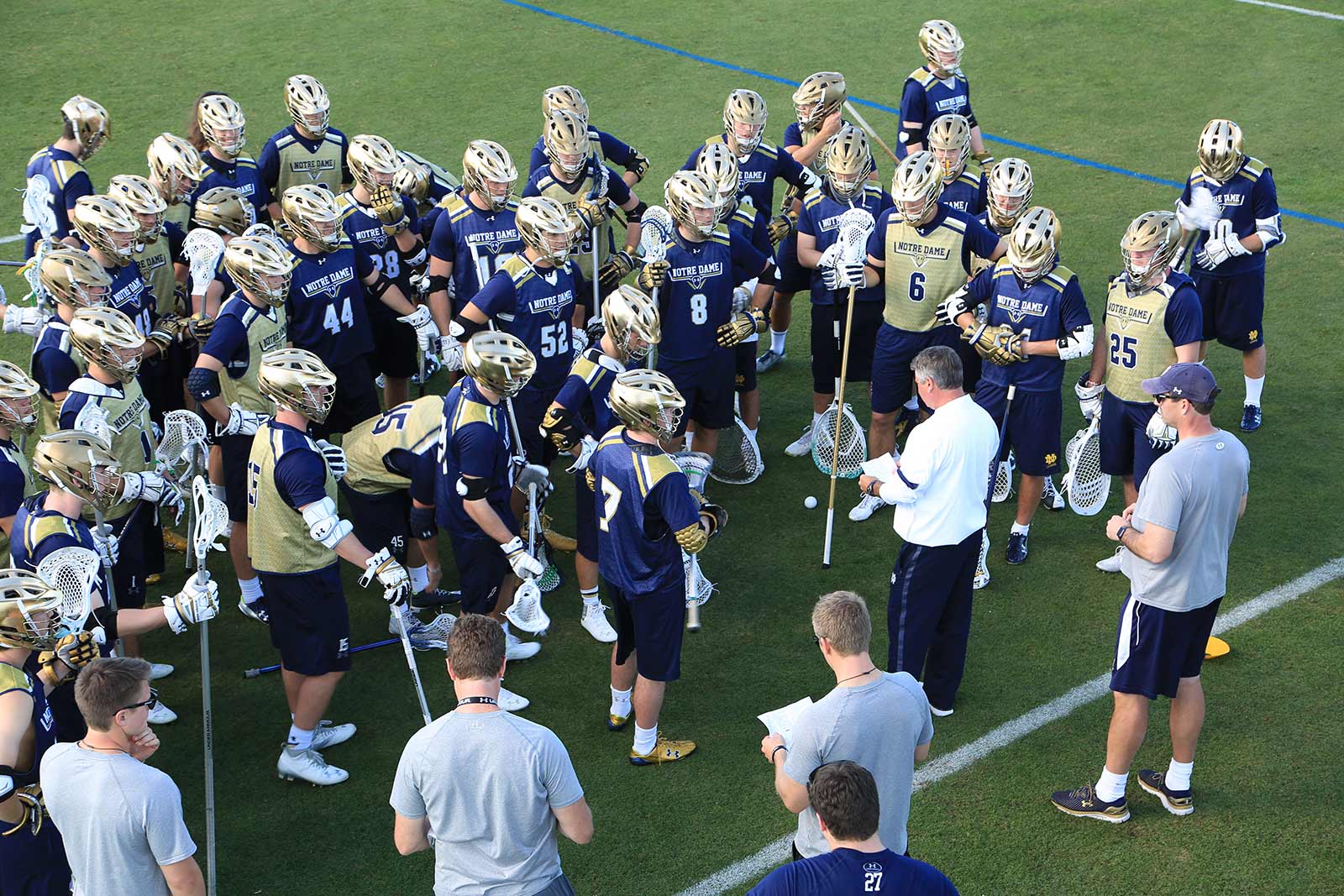
A lacrosse player constantly needs to react to a ball travelling at high speeds, maximum speeds can reach 111mph, but also to an opponent’s movement since subtle arm motion patterns can indicate whether a shot or pass can be intercepted or blocked.  

Eye Hand Coordination and Reaction

How quickly and accurately an athlete's muscles react to the visual input from the eyes often determines how successful a performer can be. Since the sporting environment is dynamic, an athlete's ability to synchronize fine motor movement indicates their level of proficiency and skill. At the IMG Performance Institute, we use state of the art technology like the Dynavision D2 board, strobe glasses and other tools to develop eye hand coordination, efficiency, balance, peripheral vision and reaction speed.  

Specific sport skill Improvement example:
In volleyball a player has to react to shots of varying degrees and distances in a matter of split seconds and get their feet under the ball as well as coordinate their arms to keep the ball in play. Proficient eye hand coordination and reaction times can give a volleyball player that much more time to make an effective decision as their body reacts appropriately to the ball.

Available Programs:

  Optimize Your Program (Weekly Programs)
Individual Assessment (1-on-1)$130
Five sessions (1-on-1)
$585
Individual Assessment (Small Group Training)$90
Three Sessions (Small Group Training)$270
Five Sessions (Small Group Training)$405
                   Athletic Development Plans (Full-Time Programs)
Semester/Optimal Program (weekly training sessions include assessment and evaluation)$1295
Full Year Membership (weekly training sessions + unlimited maintenance for year)$1995

For more information please contact David DaSilva at david.dasilva@imgworld.com or call (941) 739-7386.

IMG Performance InstituteInformation Packet

IMG's programs have produced some of the world's top athletes, and they can help you reach your goals–whether you're a beginner, top recruit, collegiate athlete or elite pro.

IMG Performance InstituteLatest News & Blog
  • Read More Getting to know coach Kevin Heiberger
    May 8, 2012

    Getting to know coach Kevin Heiberger

  • Read More Behind the gates at IMG Academies, Gatorade tests top athletes
    May 8, 2012

    Behind the gates at IMG Academies, Gatorade tests top athletes

  • Read More IMG Football’s Chris Weinke talks about training quarterbacks on the Tim Brando Show
    May 4, 2012

    IMG Football’s Chris Weinke talks about training quarterbacks on the Tim...

  • Read More Tips for winning the mental game
    May 3, 2012

    Tips for winning the mental game